Cataracts rarely announce themselves. Vision changes so gradually, sometimes over months or even years, that many people adjust without realising anything has changed at all, until a family member points out how close they are sitting to the television, or a routine eye test reveals more than a simple prescription update.
Cataracts are also far more common than most people realise. India's National Blindness and Visual Impairment Survey found that cataracts are responsible for 66.2% of blindness cases among adults above 50, making them the single leading cause of vision loss in this age group.
Knowing the early signs can help you catch cataracts before they progress to that level of impact.
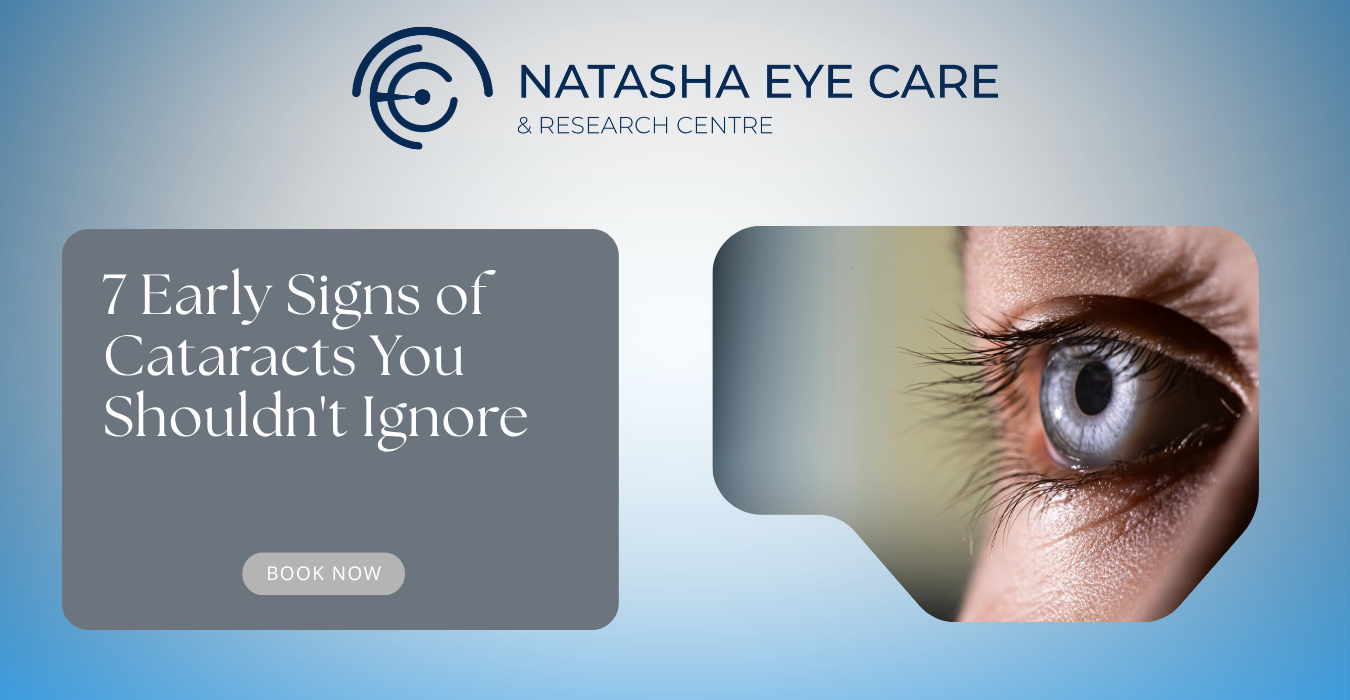
7 Early Signs of Cataracts
Blurred or Cloudy Vision
Vision that gradually becomes less sharp, almost like looking through a foggy or smudged window, is one of the earliest and most common signs of cataracts. It often develops so slowly that people initially assume they simply need a new glasses prescription.
Increased Sensitivity to Light
Bright light, whether sunlight or indoor lighting, can start to feel uncomfortably intense or glaring. This happens because a clouding lens scatters light differently than a clear one, making ordinary brightness feel harsher than it used to be.
Difficulty Seeing at Night
Night vision is often one of the first noticeable casualties of an early cataract, making it harder to see clearly in low light, whether walking through a dim room or trying to read a menu at a dimly lit restaurant.
Halos Around Lights
Seeing rings or halos around lights, particularly streetlights or headlights at night, is a hallmark early sign, caused by light scattering irregularly as it passes through the clouding lens.
Fading or Yellowing of Colours
Colours can gradually appear less vivid or take on a slight yellow or brownish tint, since the lens itself is discolouring. This change is often so gradual that people only notice it in hindsight, sometimes after cataract surgery restores their original colour perception.
Frequent Changes in Glasses Prescription
Needing your glasses or contact lens prescription updated more often than usual, without a corresponding improvement in clarity, can be an early sign that the underlying issue is the lens itself rather than a simple refractive change.
Double Vision in One Eye
Seeing a doubled or ghosted image in a single eye, even with the other eye closed, is a less common but distinctive early sign, caused by light being distorted unevenly across the clouding lens.
How to Tell If You Have Cataracts
None of these signs alone confirm a cataract diagnosis, since several can overlap with other eye conditions or simply a need for updated glasses. What genuinely tells you whether you have cataracts is a comprehensive eye examination, where an eye doctor can directly examine the lens using specialised equipment and confirm what is actually causing your symptoms.
If you notice two or more of these signs developing together, particularly if they are gradually worsening rather than staying constant, it is worth scheduling an eye exam rather than assuming it is simply a normal part of ageing.
Cataracts and Night Driving Glare: A Sign Worth Taking Seriously
Among all the early signs, glare while night driving deserves particular attention, since it directly affects safety. Oncoming headlights that seem unusually bright, streetlights that appear to bloom or streak, or a general sense that night driving has become more stressful than it used to be are all common early indicators of cataracts affecting how light passes through the eye.
Because this particular symptom has real safety implications, it is one of the signs worth acting on promptly rather than adapting around, such as by avoiding night driving altogether.
What Happens After Diagnosis
If an eye exam confirms a cataract, this does not necessarily mean surgery is needed immediately. Early cataracts are often monitored over time, with surgery generally recommended once the cataract begins meaningfully affecting daily activities such as reading, driving or recognising faces clearly.
When surgery does become appropriate, modern cataract surgery is a well established, generally quick procedure, with a range of lens options available depending on individual lifestyle and visual needs.
Don't Wait for Cataracts to Take Over Your Vision
Cataracts develop slowly, which is exactly what makes early awareness so valuable. Catching the signs sooner rather than later gives you more time to understand your options and make an informed decision, rather than waiting until vision loss significantly disrupts your daily life.
If you have noticed any of these early signs, Natasha Eye Care in Pune offers comprehensive eye examinations to accurately diagnose cataracts and guide you through the right treatment timeline for your vision. Book your eye examination to get a clear picture of your eye health.
FAQs
At what age do cataracts typically start developing?
Can cataracts be prevented?
Is light sensitivity after cataract surgery normal?
Do cataracts affect both eyes at the same time?
Can glasses correct vision affected by cataracts?