Eye problems can begin quietly. A little redness, occasional watering, mild headache, blurred vision, dryness, or eye strain may seem manageable at first. However, when these symptoms continue, repeat often, or start affecting daily activities, they should not be ignored.
Your eyes support almost everything you do, from reading and working on screens to driving, studying, recognising faces, and moving around safely. That is why understanding common eye problems and symptoms can help you know when basic care is enough and when it is time to visit an eye doctor.
Globally, at least 2.2 billion people have near or distance vision impairment, and in at least 1 billion cases, vision impairment could have been prevented or is yet to be addressed, according to the World Health Organization. Refractive errors and cataracts are among the leading causes of vision impairment and blindness worldwide.
At Natasha Eye Care & Research Centre, Pune, patients can access comprehensive eye care under one roof, including refractive surgery, robotic cataract surgery, cornea treatment, dry eye care, glaucoma treatment, retina care, paediatric ophthalmology, oculoplasty, binocular vision services, low vision care, and comprehensive eye tests. The centre has branches in Keshav Nagar and Pimple Saudagar and offers advanced eye care supported by modern diagnostics and experienced specialists.
Common Eye Problems and Symptoms
Eye problems can affect people of all ages. Some conditions cause discomfort, while others may affect vision gradually. Here are some of the most common concerns to know about.
Refractive Errors
Refractive errors occur when the eye does not focus light properly on the retina. This can lead to blurred or distorted vision.
Common symptoms include:
- Difficulty seeing far objects
- Difficulty reading nearby text
- Squinting
- Headaches
- Eye strain
- Blurred vision during school, work, or driving
- Frequent changes in glasses
Dry Eyes
It can cause burning, irritation, redness, watering, heaviness, or a gritty feeling. Many people describe it as feeling like there is dust or sand in the eyes.
Dry eyes may be more common in people who:
- Use screens for long hours
- Work in air-conditioned spaces
- Ride two-wheelers regularly
- Spend time in dusty or polluted areas
- Wear contact lenses
- Have certain medical conditions
- Take certain medicines
Eye Allergies
Eye allergies are common in dusty, polluted, or seasonal environments. Symptoms may include itching, redness, watering, swelling, burning, and repeated rubbing.
People with eye allergies may rub their eyes frequently, which can worsen irritation and redness. In children, repeated rubbing may be especially difficult to control. In adults, symptoms may worsen after outdoor travel, dust exposure, pollution, or long screen use.
Persistent allergies should not be treated casually with random eye drops. An eye doctor can help identify the cause and recommend safe treatment.
Conjunctivitis
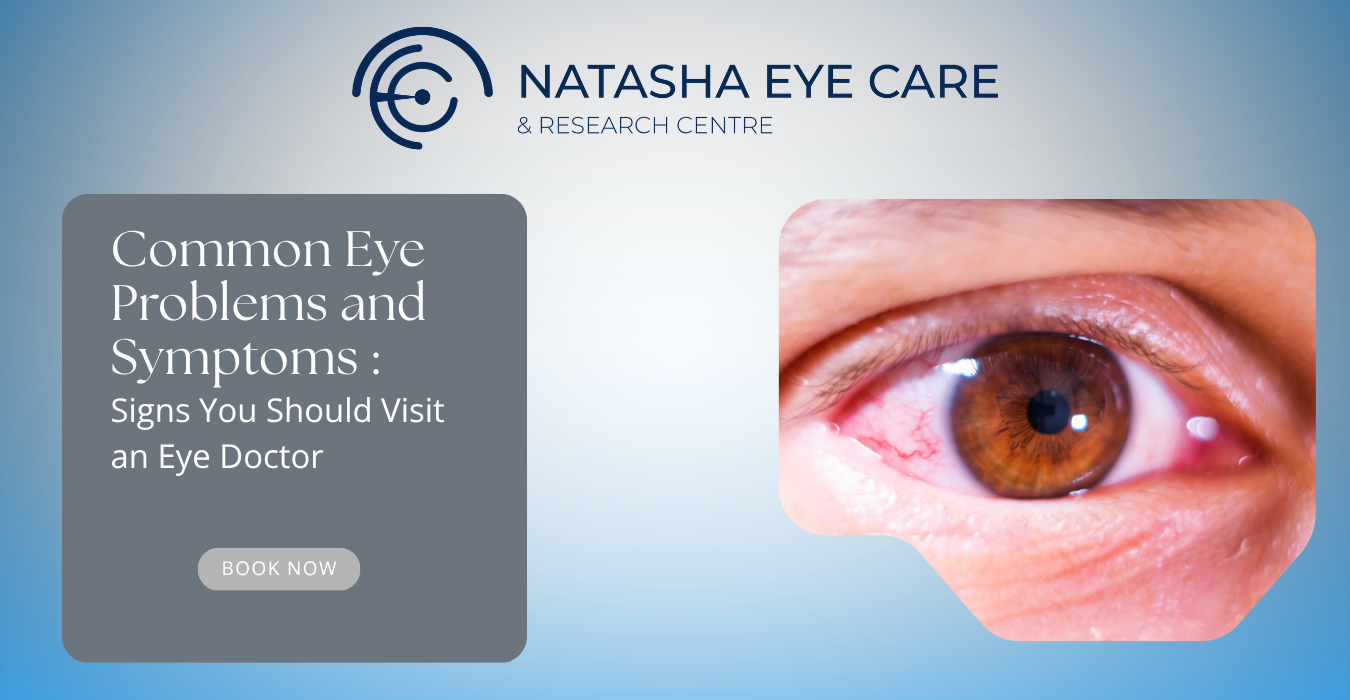
Conjunctivitis, often called pink eye, can cause redness, watering, discharge, sticky eyelids, and irritation. It may be viral, bacterial, or allergic.
If there is thick discharge, pain, swelling, or sensitivity to light, medical advice is important. During an infection, avoid sharing towels, handkerchiefs, eye cosmetics, or contact lenses to reduce the chance of spread.
Cataract
Cataract causes clouding of the natural lens of the eye. It is more common with ageing, but it can also occur due to diabetes, injury, steroid use, or other medical conditions.
Symptoms may include:
- Cloudy or blurred vision
- Glare from lights
- Difficulty seeing at night
- Faded or dull colours
- Frequent changes in glasses
- Trouble reading or driving
Glaucoma
Glaucoma is a serious eye condition that can damage the optic nerve. In many cases, it does not cause obvious symptoms in the early stage. This is why regular eye examinations are important, especially for people at higher risk.
Risk factors may include:
- Family history of glaucoma
- Older age
- Diabetes
- High eye pressure
- Previous eye injury
- Long-term steroid use
Retina-Related Eye Problems
Retina problems can affect central vision, side vision, or overall clarity. People with diabetes, high blood pressure, ageing-related changes, or a family history of retina disease should be especially careful.
Warning signs may include:
- Sudden blurred vision
- Floaters
- Flashes of light
- Dark spots in vision
- Distorted lines
- Sudden loss of vision
Digital Eye Strain
Digital eye strain is increasingly common among students, working professionals, and people who spend long hours on phones, laptops, tablets, or televisions.
Symptoms may include:
- Tired eyes
- Headaches
- Blurred vision
- Dryness
- Neck or shoulder discomfort
- Difficulty focusing
- Burning sensation
Common causes include long screen exposure, poor lighting, uncorrected vision power, poor posture, reduced blinking, and lack of breaks.
Taking regular screen breaks can help, but if symptoms keep returning, an eye check-up is recommended.
Common Eye Defects You Should Know
A common eye defect usually refers to a refractive problem that affects clear vision. These conditions are very common and can often be corrected with glasses, contact lenses, or suitable vision correction procedures.
Myopia
Myopia, or short-sightedness, makes distant objects look blurred. It often begins during childhood or teenage years, but adults can also experience changes in vision.
Hyperopia
Hyperopia, or long-sightedness, can make near work difficult. Some people may also experience headaches or eye strain, especially during reading or computer use.
Astigmatism
Astigmatism causes blurred or distorted vision at both near and far distances. It happens when the cornea or lens has an irregular curve.
Presbyopia
Presbyopia is an age-related difficulty in focusing on near objects. It usually becomes noticeable after the age of 40. People may find themselves holding reading material farther away or needing reading glasses.
These conditions should be properly evaluated before deciding on glasses, contact lenses, or refractive surgery options.
Eye Symptoms Can Look Different at Different Ages
Eye problems do not always look the same for everyone.
Children may squint, sit close to screens, rub their eyes, avoid reading, complain of headaches, or struggle to copy from the board. They may not always say that their vision is blurred.
Adults may notice eye strain, dryness, headaches, blurred vision during screen work, trouble driving at night, or difficulty reading small text.
Older adults should be more careful about cloudy vision, glare, reduced night vision, gradual vision loss, and side vision changes. These may be linked to cataract, glaucoma, retina problems, or other age-related eye conditions.
People with diabetes, high blood pressure, autoimmune conditions, previous eye injury, or a family history of eye disease should not wait for major symptoms before getting their eyes checked.
Common Causes of Eye Strain
Eye strain can happen for many reasons. It is not always due to screen use alone.
Common causes include:
- Long screen time
- Reading for long hours
- Poor lighting
- Uncorrected spectacle power
- Dry eyes
- Poor posture
- Reduced blinking
- Long hours of near work
- Stress and lack of rest
- Contact lens discomfort
Signs You Should Visit an Eye Doctor
Some symptoms should never be ignored. Visit an eye doctor if you experience:
- Sudden blurred vision
- Eye pain
- Persistent redness
- Frequent headaches
- Light sensitivity
- Floaters or flashes of light
- Double vision
- Eye discharge
- Swelling around the eye
- Difficulty reading
- Trouble seeing distant objects
- Difficulty driving at night
- Glare or halos around lights
- Cloudy vision
- Sudden increase in floaters
- Vision changes with diabetes or high blood pressure
- Eye injury
- Sudden loss of vision
Why Regular Eye Check-Ups Matter
Regular eye check-ups are important because many eye conditions do not show clear symptoms in the beginning. Glaucoma, diabetic eye disease, early cataract changes, and some retinal problems may progress quietly before vision changes become obvious.
Children need timely eye examinations because they may not always explain that they cannot see clearly. Adults who work long hours on screens may need evaluation for eye strain, dry eyes, and uncorrected vision power. People above 40 may notice near vision changes, while older adults may need monitoring for cataract, glaucoma, and retina-related concerns.
Those with diabetes, high blood pressure, family history of eye disease, previous eye surgery, or existing eye problems should follow the check-up schedule recommended by their eye doctor.
Why Choose Natasha Eye Care & Research Centre in Pune?
When it comes to eye care, accurate diagnosis matters as much as treatment. Natasha Eye Care & Research Centre brings together experienced eye specialists, advanced diagnostic systems, modern operation theatres, and a wide range of speciality services under one roof.
The centre provides care across multiple areas, including:
- Comprehensive eye tests
- Cataract treatment
- Robotic cataract surgery
- Refractive surgery
- Cornea treatment
- Dry eye care
- Glaucoma treatment
- Retina care
- Paediatric ophthalmology
- Oculoplasty
- Contact lens services
- Low vision care
With branches in Keshav Nagar and Pimple Saudagar, Natasha Eye Care & Research Centre makes specialised eye care more accessible for patients across Pune.
Final Thoughts
Eye symptoms should not be ignored, especially when they continue, worsen, or affect daily life. Blurred vision, eye strain, redness, pain, discharge, glare, floaters, or light sensitivity may point to an eye condition that needs proper diagnosis.
At Natasha Eye Care & Research Centre, Pune, patients can receive comprehensive evaluation and treatment guidance for common eye problems, vision changes, dry eyes, cataract, glaucoma, retina concerns, paediatric eye conditions, and other eye health needs. If you are noticing persistent symptoms or are due for a routine eye check-up, schedule a consultation to understand the cause and receive the right care.
FAQs
1. What are the most common eye problems people experience?
2. When should I see an eye doctor for eye symptoms?
3. Can long screen time damage my eyes?
4. How often should I have an eye check-up?
5. Are blurred vision and frequent headaches signs of an eye problem?