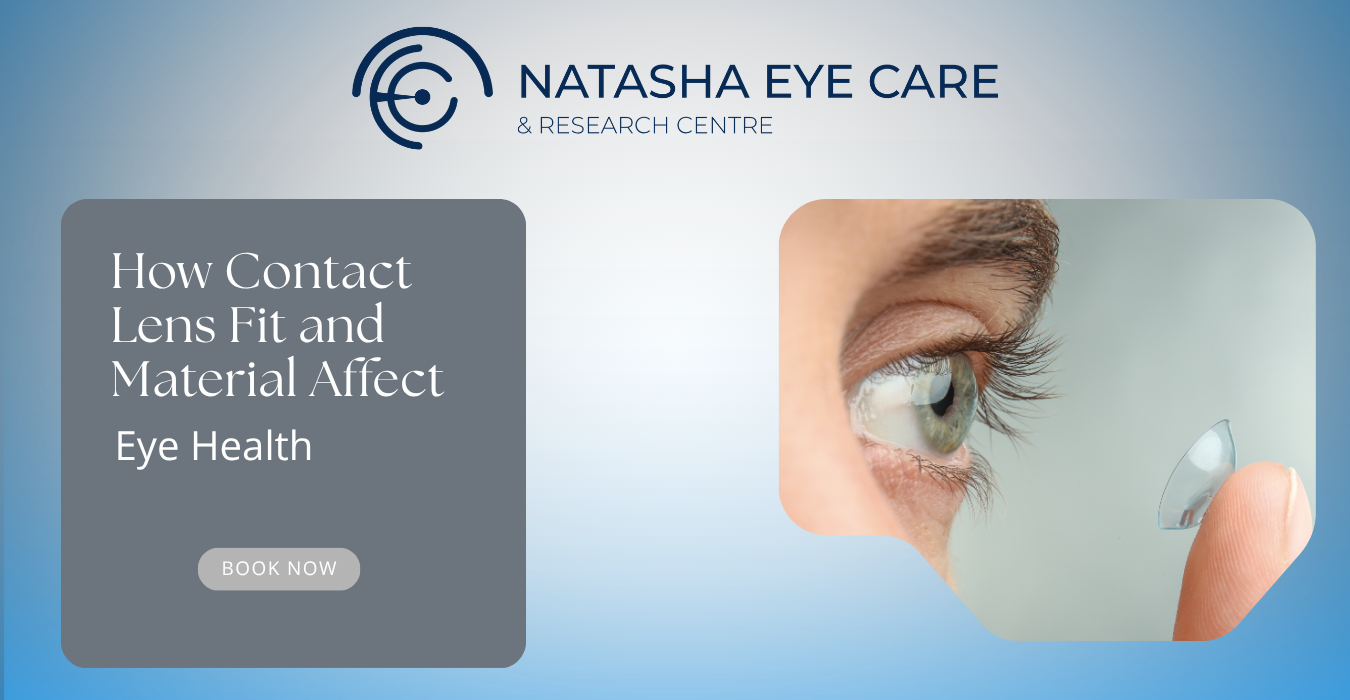
Contact lenses can give clear vision without spectacles, but they must be chosen carefully. The right lens is not only about power correction. Contact lens fit, material, oxygen flow, tear film quality, and eye surface health all play an important role in comfort and safety.
If you are choosing the right contact lenses, a professional eye evaluation is important. A lens that feels suitable for one person may not be right for another. This blog explains how contact lens fit and material affect comfort, clarity, dryness, and long-term eye health.
Why Choosing the Right Contact Lenses Matters
Contact lenses sit directly on the eye. This makes proper selection very important. A poorly selected lens can cause dryness, redness, irritation, blurred vision, watering, or a foreign body sensation.
In some cases, wrong lens use may also affect the cornea, which is the clear front surface of the eye. This is why contact lenses should not be chosen only by spectacle power or convenience. The shape of the eye, tear film, wearing time, lifestyle, and eye health must also be considered.
Choosing the right contact lenses helps improve comfort, reduce complications, and support safe long-term use.
What Is Contact Lens Fit?
Contact lens fit refers to how well the lens sits on the eye. A good fit means the lens stays centred, moves slightly with blinking, allows tear exchange, and does not feel too tight or too loose.
Contact lens fit depends on several factors, including corneal shape, eye size, tear quality, lens diameter, lens curve, and lens movement. Even if the lens power is correct, an improper fit can cause discomfort and unstable vision.
This is why contact lens fitting is different from simply buying spectacles. A contact lens prescription requires additional measurements and assessment.
Signs of a Good Contact Lens Fit
A well-fitted contact lens should feel comfortable and provide stable vision. You should not feel constant irritation or awareness of the lens.
Signs of a good fit include:
- Clear and stable vision
- Comfortable blinking
- No excessive lens movement
- No redness or watering
- No foreign body sensation
- Lens stays properly centred
- No dryness after short wear
- Easy insertion and removal
What Happens If Contact Lens Fit Is Poor?
A poorly fitted contact lens may be either too tight or too loose. Both can affect comfort and eye health.
If the Lens Is Too Tight
A tight lens may not move properly with blinking. This can reduce tear exchange and oxygen supply to the cornea. The eye may feel dry, red, heavy, or uncomfortable.
A tight lens may also be difficult to remove. If worn for long hours, it may increase corneal stress and irritation. In some cases, the person may not feel much discomfort at first, but redness or blurred vision may develop later.
If the Lens Is Too Loose
A loose lens may move too much on the eye. This can cause blurred or fluctuating vision, irritation, excessive watering, or discomfort while blinking.
The lens may also slip out of position or fall out. This can be especially troublesome during outdoor activity, sports, or long working hours.
A proper fitting trial helps identify these problems before regular use begins.
Why Contact Lens Material Matters
Contact lens material affects oxygen supply, moisture retention, comfort, and wearing time. The cornea needs oxygen to remain healthy. Since contact lenses cover the cornea, the material must allow enough oxygen to pass through.
Some materials are designed for daily comfort, while others are used for specific eye conditions. The right material depends on your eye health, tear film, corneal shape, prescription, and lifestyle.
Common Types of Contact Lens Materials
Soft Contact Lenses
Soft contact lenses are flexible and commonly used for routine vision correction. They are often comfortable for beginners and may be suitable for myopia, hypermetropia, and some cases of astigmatism.
They are available in daily, fortnightly, or monthly replacement options, depending on the type advised.
Silicone Hydrogel Lenses
Silicone hydrogel lenses allow better oxygen flow to the cornea compared to some traditional soft lenses. They may be useful for people who need longer wearing hours, provided their eyes are suitable.
However, better oxygen flow does not mean the lenses can be worn carelessly. Wearing time, cleaning, and replacement schedule should still be followed strictly.
Rigid Gas Permeable Lenses
Rigid gas permeable lenses are firmer lenses that allow oxygen to pass through. They may provide sharper vision in selected cases, especially for irregular corneas or higher optical needs.
They may take longer to adapt to compared to soft lenses, but they can be very useful when fitted properly.
Specialty Contact Lenses
Some patients need specialty contact lenses for conditions such as keratoconus, high power, dry eye concerns, irregular cornea, or post-surgical corneal changes.
Scleral lenses may be advised in selected cases because they vault over the cornea and rest on the white part of the eye. They can help improve comfort and vision in certain complex corneal conditions, but they require expert fitting and regular follow-up.
Contact Lens Fit and Dry Eyes
Poor contact lens fit or unsuitable material can worsen dry eyes. A lens that does not match the tear film may cause burning, grittiness, redness, fluctuating vision, or lens intolerance.
Some people feel comfortable for the first few hours but develop dryness later in the day. This may happen due to reduced tear quality, long screen use, air conditioning, allergies, or improper lens material.
Before prescribing contact lenses, an eye specialist may assess the tear film and eye surface, especially if the patient already has dry eye symptoms.
How Eye Doctors Choose the Right Contact Lenses
Choosing the right contact lenses involves more than checking eye power. An eye doctor may perform a detailed evaluation that includes:
- Eye power check
- Corneal curvature measurement
- Tear film assessment
- Eye surface examination
- Trial lens fitting
- Lens movement assessment
- Vision testing with lenses
- Comfort review
- Instructions on lens hygiene and wearing time
The trial fitting is important because it helps the doctor see how the lens behaves on the eye during blinking and movement.
Why You Should Not Buy Contact Lenses Without an Eye Check
Buying contact lenses online or over the counter without an eye check can be risky. Spectacle power alone is not enough for safe contact lens use.
The lens may not match your corneal curve, tear quality, or eye health needs. Incorrect lenses can cause dryness, redness, blurred vision, corneal irritation, or infection risk.
Even cosmetic or coloured contact lenses should be used only after proper eye evaluation and fitting guidance.
Final Thoughts
Contact lens fit and material directly affect comfort, clarity, oxygen flow, dryness, and overall eye health. Choosing the right contact lenses should always involve professional evaluation, especially if you have dry eyes, allergies, high power, or corneal concerns.
If you are planning to use contact lenses or are facing discomfort with your current lenses, consult Natasha Eye Care & Research Centre, Pune, for contact lens fitting, dry eye evaluation, and personalised eye care guidance.
FAQs
Why is contact lens fit important?
How do I know if my contact lenses fit properly?
Can the wrong contact lens material cause dry eyes?
Is choosing the right contact lenses different from choosing spectacles?
When should I stop wearing contact lenses and consult an eye doctor?