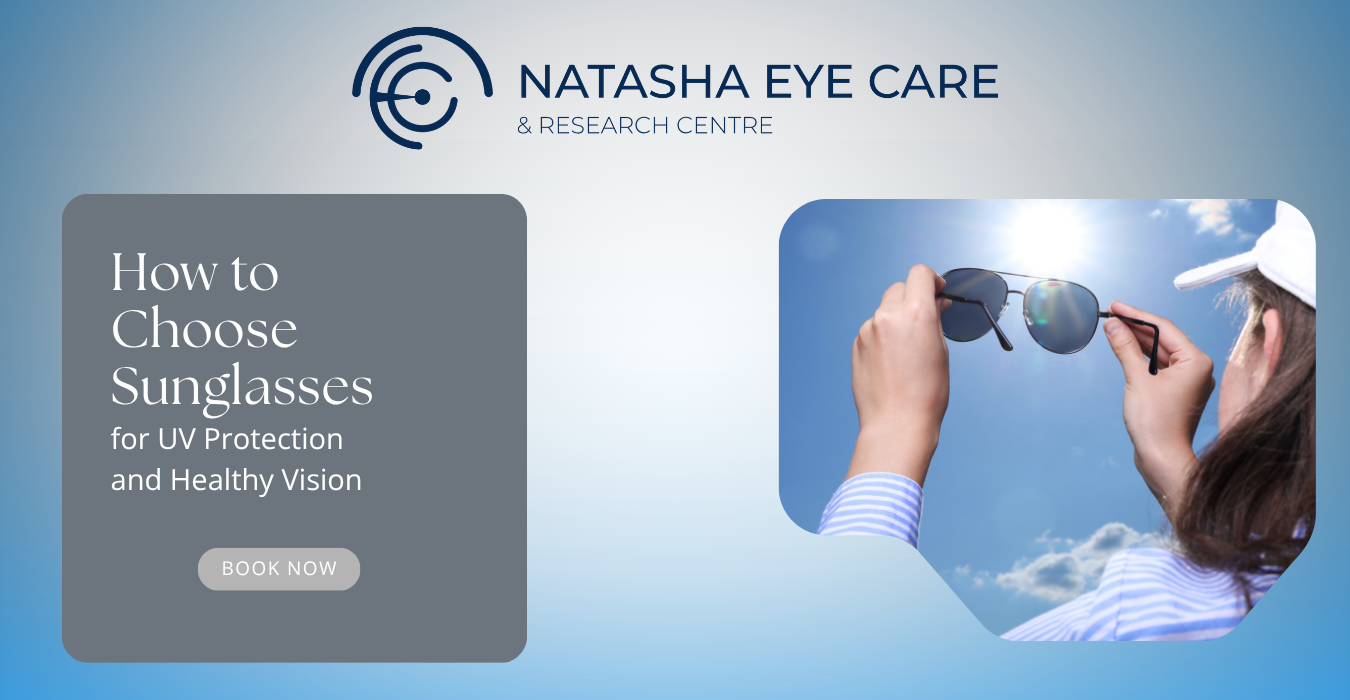
Sunglasses are not just a style accessory. They protect your eyes from harsh sunlight, glare, dust, and harmful ultraviolet rays. However, not every dark pair of sunglasses gives proper eye protection. Some lenses may reduce brightness but may not block UV rays effectively.
If you are wondering how to choose sunglasses, focus on UV protection, lens quality, comfort, coverage, and your lifestyle needs. This blog explains how to select the best sunglasses for eye protection and the difference between polarized vs UV protection sunglasses.
Why Sunglasses Matter for Eye Health
Sunlight exposure can affect the eyes over time. Ultraviolet rays may contribute to eye surface irritation, dryness, light sensitivity, cataract risk, and retinal stress. Bright sunlight and glare can also cause squinting, headaches, watering, and discomfort during outdoor activities.
Good sunglasses reduce harmful exposure and improve visual comfort. They are especially useful while driving, travelling, walking outdoors, cycling, playing sports, or spending long hours in bright conditions.
The aim is not only to reduce brightness but also to protect the eyes properly.
How to Choose Sunglasses for Eye Protection
When choosing sunglasses, the most important factor is UV protection. Lens darkness, colour, price, or brand alone does not guarantee safety.
Good sunglasses should protect against both UVA and UVB rays. They should also fit well, provide clear vision, and offer enough coverage around the eyes.
Here are the key things to check before buying sunglasses.
1. Look for 100% UV Protection
Choose sunglasses that clearly mention 100% UV protection or UV400. UV400 means the lenses block ultraviolet rays up to 400 nanometres, which includes both UVA and UVB rays.
Do not assume that darker lenses are safer. A very dark lens without UV protection may reduce brightness but may not protect the eyes from ultraviolet rays. In some cases, dark lenses may make the pupil larger, allowing more light to enter if UV protection is poor.
Always check the UV protection label before buying.
2. Understand Polarized vs UV Protection Sunglasses
Many people confuse polarised lenses with UV protection. They are not the same.
UV Protection
UV protection blocks harmful ultraviolet rays from reaching the eyes. It is essential for eye safety and should be present in any good sunglasses.
Polarized Lenses
Polarised lenses reduce glare from reflective surfaces such as roads, water, glass, vehicles, and wet ground. They are useful for driving, outdoor work, travel, sports, and beach or water activities.
However, polarisation does not automatically mean UV protection. A polarised lens should also mention UV400 or 100% UV protection. When comparing polarized vs UV protection sunglasses, remember that UV protection is essential, while polarisation is useful for glare control.
3. Choose the Right Lens Size and Coverage
Sunglasses should cover the eyes well. Larger lenses or wraparound frames may offer better side protection from sunlight, dust, and wind.
This is especially useful for people who drive, spend time outdoors, play sports, or have light sensitivity. Sunglasses should sit comfortably on the face and should not slide down repeatedly.
A good fit improves both protection and comfort.
4. Check Lens Quality and Clarity
Poor-quality lenses can cause visual distortion, eye strain, headaches, and discomfort. The lenses should provide clear and stable vision without bending straight lines or causing uneven clarity.
Avoid scratched, warped, or uneven lenses. Scratches can scatter light and make vision uncomfortable, especially in bright sunlight.
Good lens clarity is important even if the sunglasses are used only for casual outdoor wear.
5. Choose Lens Colour Based on Use
Lens colour can affect comfort and contrast, but it should not be confused with UV protection.
Grey lenses help maintain natural colour perception and are useful for general outdoor use. Brown or amber lenses may improve contrast and can be helpful while driving or during outdoor activity. Green lenses offer balanced vision and may reduce glare while keeping colours comfortable.
The best lens colour depends on your comfort and use. UV protection remains the most important factor.
6. Consider Your Lifestyle
Different people need sunglasses for different reasons. A person who drives daily may need glare reduction. Someone who cycles or plays outdoor sports may need better side coverage and a secure fit. A person who spends time near water may benefit from polarised lenses.
Sunglasses may also be useful after certain eye procedures if advised by the doctor. People with dry eyes, allergies, or light sensitivity may need better coverage to reduce irritation outdoors.
Choose sunglasses based on how and where you use them.
7. Do Not Forget Children’s Sunglasses
Children also need UV-protected sunglasses because they spend time outdoors during school, play, travel, and sports. Choose lightweight, comfortable, durable sunglasses with proper UV protection.
Avoid toy sunglasses or low-quality lenses without UV safety information. Children are more likely to wear sunglasses regularly if they are comfortable and fit well.
Common Mistakes While Buying Sunglasses
Many people choose sunglasses mainly by style or lens darkness. This can lead to poor eye protection.
- Common mistakes include:
- Choosing sunglasses only by appearance
- Assuming darker lenses are safer
- Ignoring the UV400 label
- Buying poor-quality roadside sunglasses
- Confusing polarised lenses with UV protection
- Wearing scratched lenses
- Not checking frame fit or coverage
- Using children’s toy sunglasses for outdoor protection
Best Sunglasses for Eye Protection: What Should They Have?
The best sunglasses for eye protection should have 100% UV protection or UV400, clear lens quality, comfortable fit, and adequate coverage. Scratch-resistant lenses may be helpful for regular use.
Polarised lenses are useful if glare is a problem, especially while driving or spending time near reflective surfaces. The frame should suit your face size and activity level.
Good sunglasses should protect your eyes without causing strain, headache, or blurred vision.
Who Needs Extra Eye Protection?
Some people need to be more careful about sun exposure and glare. This includes frequent drivers, outdoor workers, children, people with light sensitivity, and those who spend long hours outdoors.
Patients after certain eye procedures may also need sunglasses if advised by their doctor. People with dry eye, allergies, corneal problems, cataract, retinal disease, or eye surface sensitivity may benefit from better outdoor protection.
When Should You Consult an Eye Doctor?
You should consult an eye doctor if you experience frequent light sensitivity, eye pain in sunlight, watering or redness outdoors, blurred vision, headaches while wearing sunglasses, or sudden difficulty tolerating bright light.
Medical advice is also important if you have recently had eye surgery or have existing eye conditions such as cataract, retinal disease, dry eye, glaucoma, or corneal problems.
Persistent light sensitivity may need proper eye evaluation rather than only changing sunglasses.
Final Thoughts
Sunglasses should be chosen for UV protection, clarity, comfort, coverage, and lifestyle needs. Polarised lenses can reduce glare, but UV protection is essential for eye safety.
If you have light sensitivity, eye discomfort outdoors, headaches while wearing sunglasses, or an existing eye condition, consult Natasha Eye Care & Research Centre, Pune, for eye evaluation and personalised eye care guidance.
FAQs
How to choose sunglasses for eye protection?
What are the best sunglasses for eye protection?
What is the difference between polarized vs UV protection sunglasses?
Do children need UV-protected sunglasses?
When should I consult an eye doctor for light sensitivity?