



Understanding Corneal Transplant Surgery
A corneal transplant, also known as keratoplasty, is a surgical procedure in which damaged or diseased corneal tissue is replaced with healthy donor tissue.
The cornea is the clear, front surface of the eye responsible for focusing light. When it becomes scarred, swollen, or irregular, vision can be significantly affected.
Corneal transplant surgery helps restore vision, reduce discomfort, and improve the overall health of the eye.
Conditions That May Require a Corneal Transplant
You may be advised to undergo a corneal transplant if you have:
- Keratoconus (thinning and bulging of the cornea)
- Corneal scarring due to injury or infection
- Fuchs' endothelial dystrophy
- Corneal swelling (oedema)
- Failed previous eye surgery or transplant
- Severe corneal infections
- Vision loss not correctable with glasses or contact lenses
Types of Corneal Transplant Procedures
At Natasha Eye Care, we offer advanced corneal transplant techniques tailored to your condition:
Penetrating Keratoplasty (PK)
A full-thickness corneal transplant where the entire damaged cornea is replaced. This is typically recommended for severe corneal damage.
DSEK (Descemet's Stripping Endothelial Keratoplasty)
A partial-thickness transplant that replaces only the inner corneal layer. It allows for faster recovery and fewer complications compared to full-thickness surgery.
DMEK (Descemet Membrane Endothelial Keratoplasty)
An advanced, highly precise procedure replacing only the innermost layer of the cornea. It offers quicker visual recovery and excellent outcomes.
DALK (Deep Anterior Lamellar Keratoplasty)
A partial-thickness transplant preserving the inner corneal layers. It is commonly used in conditions such as keratoconus.
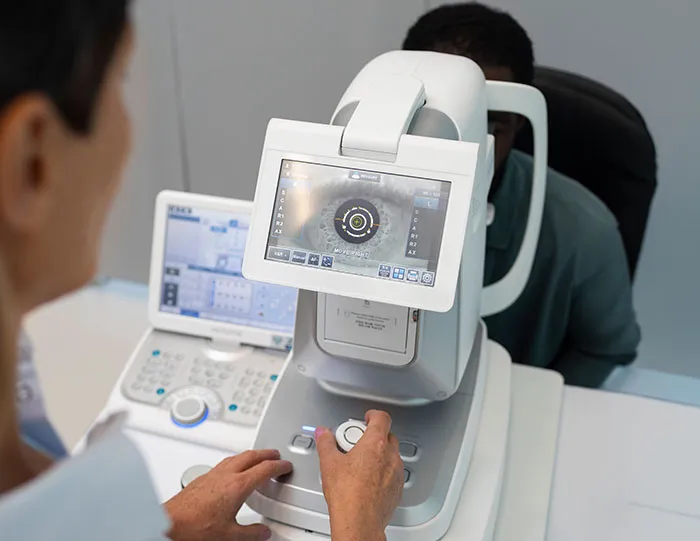
Advanced Diagnosis and Pre-Surgical Evaluation
A detailed evaluation is essential to determine the most appropriate type of transplant.
Our assessment includes:
- Comprehensive eye examination
- Corneal imaging and topography
- Ocular surface evaluation
- Detailed medical and surgical history
This ensures accurate diagnosis and optimal surgical planning.
What to Expect During Your Treatment
Before Surgery
- Detailed consultation and diagnostic tests
- Discussion of suitable transplant technique
- Pre-surgical preparation and guidance
During Surgery
- Performed under sterile conditions by experienced specialists
- Use of advanced microsurgical techniques
- Typically completed within a few hours
After Surgery
- Gradual improvement in vision over weeks to months
- Regular follow-up visits to monitor healing
- Use of prescribed eye drops to prevent infection and rejection
Recovery After Corneal Transplant
Recovery varies depending on the type of procedure performed.
- Partial-thickness procedures (DSEK, DMEK, DALK) generally offer faster recovery
- Full-thickness transplants (PK) may take longer to heal
- Vision improves gradually as the eye heals
- Follow-up care is essential for long-term success
Most patients experience significant improvement in vision and comfort with proper care.
Our Approach to Corneal Transplant in Pune
Patients trust us for advanced corneal care due to our expertise and technology-driven approach:
Experienced cornea specialists with advanced surgical expertise
Comprehensive range of transplant techniques (PK, DSEK, DMEK, DALK)
Advanced diagnostic technology for precise treatment planning
Personalised care tailored to each patient
NABH-accredited centre with a strong track record in corneal procedures
Restore Clear Vision with Advanced Corneal Care
If corneal disease is affecting your vision, timely treatment can make a significant difference.
Consult our specialists for a detailed evaluation and personalised treatment plan designed to restore your vision and improve eye health.
Frequently Asked Questions
A corneal transplant is a surgical procedure where damaged corneal tissue is replaced with healthy donor tissue to restore vision.
If you have blurred vision, corneal damage, or conditions like keratoconus or corneal swelling, your doctor may recommend a transplant.
PK replaces the entire cornea, while DSEK, DMEK, and DALK replace specific layers, allowing for faster recovery and fewer complications.
Yes, it is a well-established procedure. With advanced techniques and proper care, it has a high success rate.
Recovery varies by procedure. Partial transplants may recover within weeks, while full-thickness transplants can take several months.
Most patients experience significant improvement in vision, although final outcomes depend on the underlying condition and healing process.
As with any surgery, there are risks such as infection or rejection, but these are manageable with proper follow-up and medication.
Corneal transplants can last many years. With proper care and regular check-ups, long-term success is common.