


Understanding Meibomian Gland Dysfunction
Meibomian glands are responsible for producing the oil layer of your tears, which prevents rapid evaporation.
When these glands become blocked or do not function properly, it leads to tear instability and dry eye symptoms.
MGD is increasingly common due to:
- Long screen usage
- Reduced blinking
- Environmental factors
- Age-related changes
Signs You May Have Meibomian Gland Dysfunction
You may need evaluation if you experience:
- Dryness or irritation in the eyes
- Burning or stinging sensation
- Redness along the eyelids
- Watery eyes despite dryness
- Blurred or fluctuating vision
- Eye fatigue after screen use
- Crusting or stickiness around eyelids
Advanced Diagnosis for Meibomian Gland Dysfunction
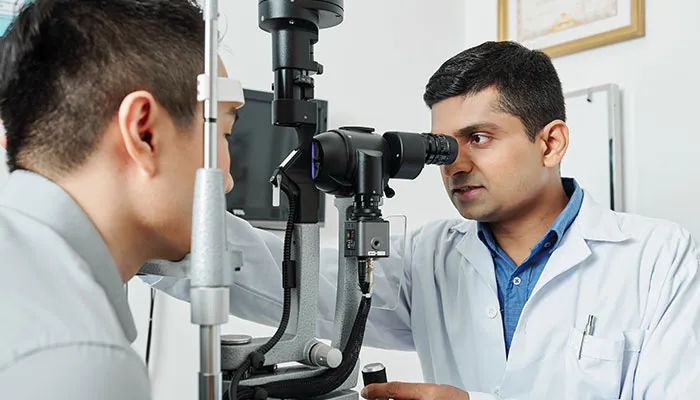
At Natasha Eye Care, we use specialised diagnostics at our Dry Eye Lab to assess gland function and tear stability.
Our evaluation includes:
- Meibomian gland imaging and assessment
- Tear film evaluation
- Ocular surface analysis
- Detailed eye examination

Meibomian Gland Dysfunction Treatment Options in Pune
Based on diagnosis, we offer targeted treatments to improve gland function and tear quality:
- Warm compress therapy and eyelid hygiene guidance
- Medical management to reduce inflammation
- Advanced treatments for gland blockage
- Tear film stabilisation therapies
- Lifestyle and screen-use management
What to Expect During Your Treatment
Before Treatment
- Detailed eye examination
- Gland function assessment
- Personalised treatment planning
During Treatment
- Non-invasive or minimally invasive procedures
- Comfortable and quick sessions
- Guided by experienced specialists
After Treatment
- Gradual improvement in symptoms
- Follow-up consultations
- Ongoing care and maintenance guidance
Why Choose Natasha Eye Care for MGD Treatment in Pune
Patients across Pune trust us for specialised dry eye care because of our expertise and advanced approach:
Advanced Dry Eye Lab for accurate diagnosis
Specialised evaluation of gland function
Experienced specialists in ocular surface care
Personalised treatment plans
Comprehensive care under one roof
Struggling with persistent dry eye symptoms caused by gland blockage?
Get a detailed evaluation and targeted treatment for Meibomian Gland Dysfunction.
Frequently Asked Questions
MGD is a condition where the oil-producing glands in the eyelids become blocked or do not function properly, leading to dry eye symptoms.
Yes, MGD is one of the most common causes of dry eye, especially among people with high screen usage or reduced blinking.
Common causes include long screen time, ageing, poor eyelid hygiene, and environmental factors like pollution.
MGD is diagnosed through specialised tests that assess gland function, tear stability, and eye surface health.
Yes, with proper diagnosis and targeted treatment, gland function can be improved and symptoms can be effectively managed.
Most treatments are non-invasive and comfortable, with minimal discomfort.
Many patients start noticing improvement within a few weeks, depending on the severity of the condition.